
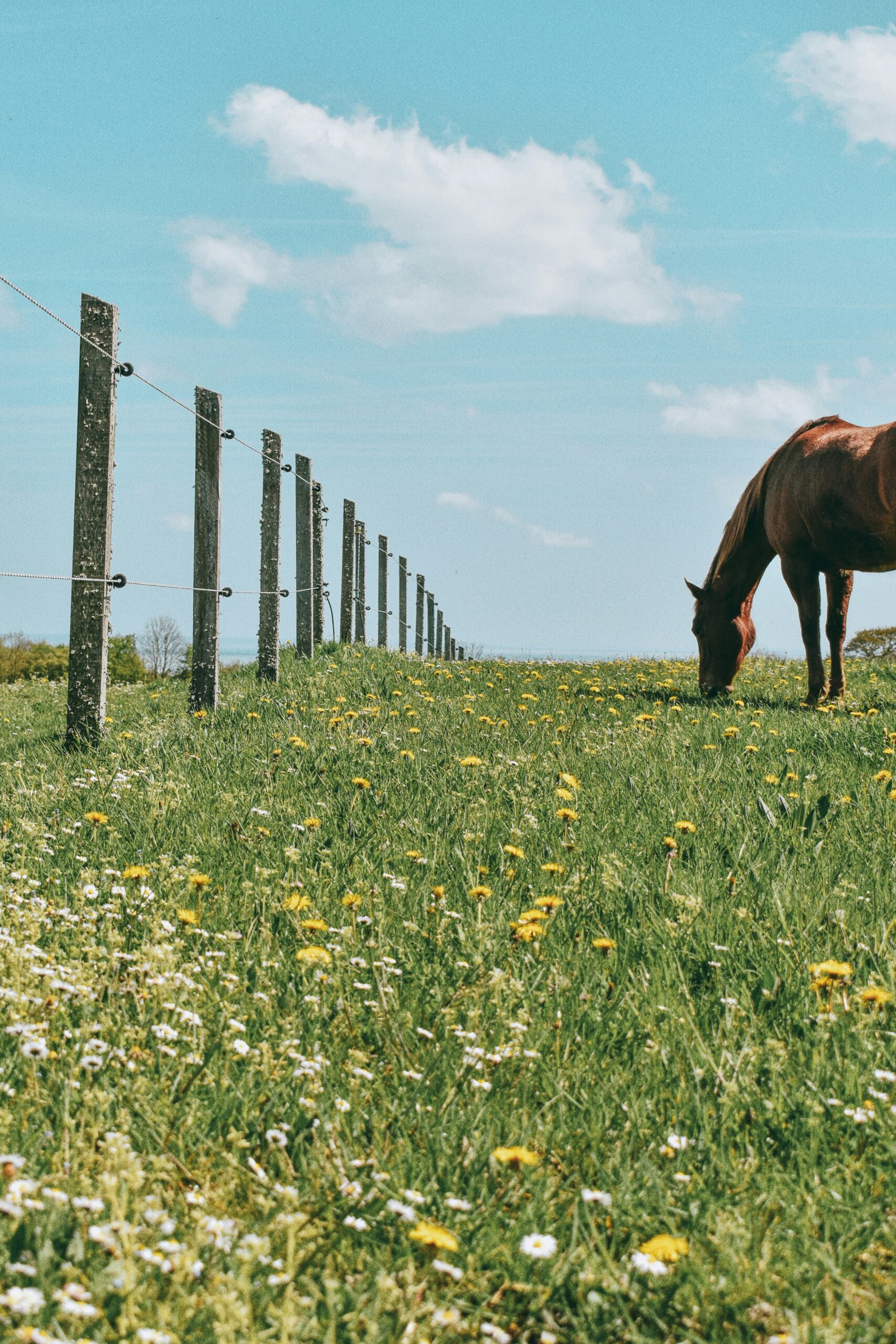

Do horses have a role in regenerative agriculture and maintaining biodiversity?
Regenerative farming, and more specifically the use of livestock animals to regenerate land and restore biodiversity, is a subject that has received a lot of research in recent years. Most of the attention has been on cattle however there has also been recent research on the role that horses and their part to play in land management through their specific grazing habits and natural role they play in nature.
The grazer effect
Horses are classified as trickle feeders, meaning that their digestive systems are designed to consume small amounts of fiber forage consistently throughout the day rather than larger meals at more restricted times. In the wild horses will spend around 12-16+ hours a day foraging and grazing. Their grazing patterns are also different to cattle and sheep in that they tend to create a mosaic of patches of short grass and long grass as opposed to a more even sward. This has an impact upon the diversity of insects and bird species and the ecosystem as a whole. The disturbance dynamics of horses also differ fundamentally from other livestock due to their weight distribution and unique hoof shape, which can act as a catalyst for regeneration and diversity. When horses move across a pasture, their hooves create small-scale soil disturbances, often called poaching or trampling, that break up dense swards and create open “microsites” in the soil. These exposed patches serve as ideal nurseries for pioneer species and annual wildflowers that would otherwise be outcompeted by aggressive perennial grasses. While managed grazing can foster regeneration, in domestic situations, overgrazing may reverse these benefits, leading to a state often described as “horse-sick” land. This state occurs when grazing pressure exceeds the land’s ability to recover. Horses often choose younger, tender, and more palatable herbage, while avoiding areas where they have defecated or urinated, leading to “spot grazing” where they overgraze specific spots down to bare ground and leave other areas ungrazed. Also, because they graze so close to the ground, this allows them to graze very short, new growth, which can damage pasture longevity if not managed.
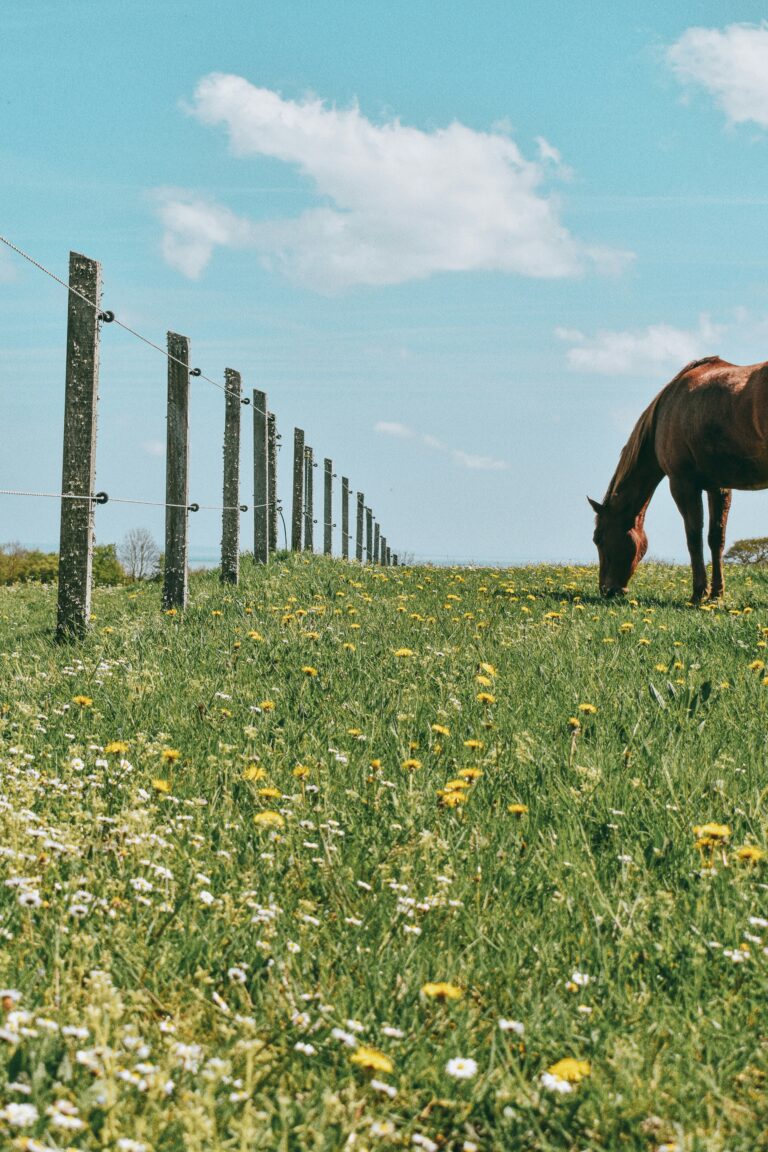
Use of equines in biodiversity management and habitat restoration.
There have been a number of rewilding projects in which the horse has been successfully used to manage grasslands and restore biodiversity. By analyzing some of these projects, we can get a better understanding of how to manage horses generally to create healthier, more productive pastures. Rewilding horses has worked by reintroducing primitive, hardy breeds into large, semi-wild landscapes to act as “ecosystem engineers”. Since the original European wild horse (the Tarpan) is extinct, conservationists have used modern proxies which are breeds that still possess wild survival traits and behaviors. Rewilding projects will particularly prioritize breeds which are self-sufficient, cold-hardy, and resistant to disease. An example is the Exmoor pony which is often used in the UK due to its ability to thrive in harsh moorland and woodland. Another example is the Konik horse which originates in Poland and is commonly used in European wetland rewilding (e.g. Wicken Fen) because they excel at grazing marshes and reeds. Also Przewalski’s Horse which has been introduced in places such as the Iberian Highlands to restore steppe habitat.
In these situations, horses are left to find their own food and shelter year-round with minimal human interaction.
There are particularly interesting rewilding projects which we can look at in more detail. The first is The Knepp Wildland Project (UK) which is located in West Sussex and is one of the most successful rewilding sites in England. A herd of roughly 30 Exmoor ponies serves as a proxy for the extinct Tarpan. They have an important ‘facilitator’ role by grazing the toughest, coarsest grasses which then helps the estate’s Longhorn cattle by creating patches of sweeter, tender grass. This is a form of ecological engineering which helps to create a rich mosaic of scrub, parkland, and glades, providing critical habitat for rare species such as turtle doves and purple emperor butterflies.
The second is the project in the Greater Côa Valley (Portugal/Spain), Across the Greater Côa Valley in Portugal and the Iberian Highlands in Spain, free- roaming Sorraia and Przewalski’s horses are being used to manage abandoned agricultural land. These horses consume flammable grasses and shrubs, significantly reducing fuel loads for catastrophic wildfires. In 2025, natural grazing was proven to minimize the spread of an intense wildfire at the Ermo das Águias site. Their grazing increases the proportion of flowering plants for bees and butterflies, while their manure enriches soil organic matter. In these landscapes, horses help open dense, regenerating forests to light, allowing for structural diversity and increased acorn production.
In summary, what we learn from these two cases is that selective grazing and trampling from horses helps produce a mosaic of diverse vegetation heights. Enhanced seed dispersal (either via digesting and excreting or transporting them on their bodies) and nutrient cycling helps species recover as seen in surges in “red list” bird species and rare insects. Climate resilience is also improved through the clearing of combustible vegetation resulting in a reduced risk of uncontrolled burning and finally soil health is improved through increased microbial biomass and enhanced carbon sequestration.
What does this teach us about managing the domestic horse
To help translate what we learn from these rewilding success stories to horse paddocks in a domestic setting, owners can adopt “eco-centric” management that views the horse as a tool for land health rather than just a consumer. Main actions include implementing a track system to encourage movement while protecting core “wilding” zones and adopting a rotational grazing strategy to prevent the soil compaction and root death as seen in overgrazed sites. Finally, allowing for “planned messiness” such as planting edible hedgerows and leaving tall grass “roughs” helps create the structural diversity necessary to support the same pollinators and birdlife found at sites like Knepp.
Conclusion
In conclusion, the evidence from modern rewilding initiatives establishes that equines offer distinct ecological benefits that complement, rather than merely mimic, other livestock species. Through mosaic patch dynamics, structural forest thinning, and micro-site soil disturbance, horses naturally foster the complex habitats required by threatened flora and fauna. While unmanaged domestic grazing risks soil compaction and pasture degradation, translating rewilding principles into everyday paddock management offers a sustainable path forward. Embracing adaptive, eco-centric grazing management allows domestic horse owners to actively contribute to the global goals of regenerative agriculture, restoring biodiversity both above and below the soil.